
This months’ highlighted collection is from Weston Park Library! Find out more in this wonderful blog post written by volunteers, Barbara Hughes, Charles Gill and Dr Stacey Lewis and Curatorial and Learning Development Coordinator, Alison Poole.
Weston Park is in every sense a living country house, which was a home through inherited succession, from medieval times to 1986 when it was gifted to the nation by Richard, 7th Earl of Bradford. It is now owned and cared for by the Weston Park Foundation, who in 2026 celebrate 40 years as an independent charity.
Just as Disraeli was a frequent visitor in the 19th century, so, in recent years presidents and prime ministers from across the globe have used Weston Park for G8 and other important meetings.
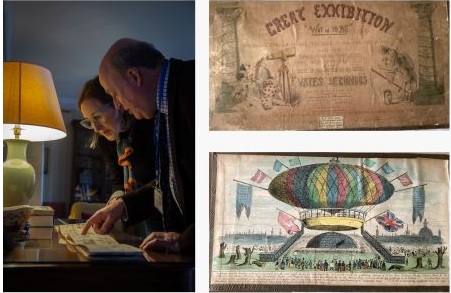
The House has a library which contains around 3,000 books, most of which were acquired during the eighteenth and nineteenth centuries, and which cover a wide variety of topics. A similar number of volumes exist throughout the house, including many more recent publications.
The Library project at Weston is being carried out by the Curatorial team, supported by volunteers, whilst doing the biannual clean. We have been building on our current catalogued records with the introduction of a new books template so that they can be made available to a wider audience. During this process, the volunteers have identified books which, for a wide variety of reasons, have caught their imaginations.
The collections represent the interests of the families living here, with diverse topics covering geography (local, national and international), natural history, trade, exploration, communication, architecture, biography, and culture.
Notable items from the collections are identified as personal volumes belonging to many different family members. These range from family bibles to school prizes, and books acquired by family members when they had the opportunity to travel extensively.
The collection of books is not a library in any academic sense. This is a rich collection of books built up over several generations and comprises the books collected by the many family members themselves. They each had a range of interests and so we find local history, botany, travel books and atlases, periodicals, and novels of the day. There was certainly an element of books by the yard for what might now be considered ostentatious display, but over the century’s family members have held high political office and have entertained many leading lights of those same generations. So, we have found plenty of Disraeli’s books and many written about him because he was a close friend of the 3rd Earl and Countess Selina.
From the beginning of the project Volunteers have had the opportunity to handle the books and discover annotations, illustrations, stories and titles that have captured their attention giving rise to their ‘book of the week.’
Volunteer Charles Gill, favourite book
‘My personal pick has to be the pair of matching document boxes made to look like books in case 5 ref 118/0127 (7) Inside are a collection of very old 1660s books and associated pamphlets and documentation. One of these is a near contemporaneous account printed in 1660 the year of the Restoration by one Thomas Blount and this is his version of the escape of King Charles II after his defeat at the Battel of Worcester in 1651.
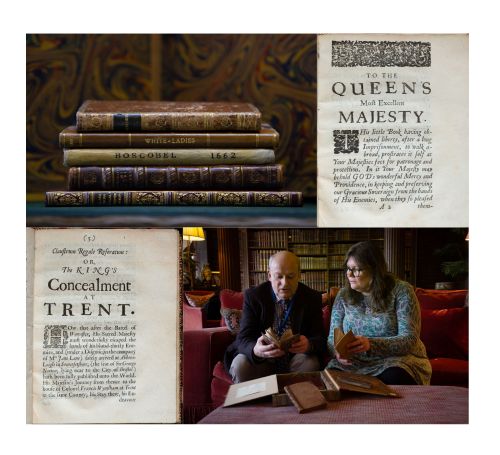
Part of that escape was spent hiding in an oak tree at Boscobel. At the time the property was owned by the Giffard family of Chillington Hall, close to Weston. In the 19th century the property was acquired by the family, and they certainly had a great interest in the history of the escape as they were a staunch Royalist family themselves. Some of the book describes local places close to Weston Park and as a local resident this period of history and the local connections make it a compelling read, and it would be good to have more time to chase down any of the Bridgeman family mentioned in the various accounts in those document boxes and other accounts.’
Volunteer Barbara Hughes, favourite book
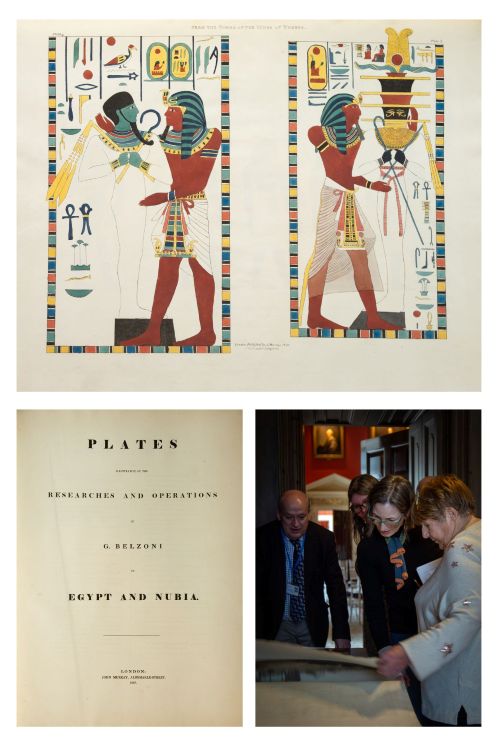
‘The size (18 x 24 inches) of the publication first made me aware of it, but once we looked inside, I became transfixed. The volume has the title “Plates Illustrative of the Researches and Operations of G Belzoni in Egypt and Nubia”, and it was published in London in 1821. There are 44 lithographs with six new plates at the back of the collection dated 1822.
During Napoleon’s expedition to Egypt in 1798, one of his soldiers found the Rosetta Stone which provided the key to deciphering hieroglyphic writing, and the European interest in Egyptology began. This collection of lithographs is a very early publication which presents representations of Belzoni’s time in Egypt. The colours used are strong, the subject matter is varied, and the book is a gem.’
The project has been a fountain of knowledge and interest, and a real discussion point with volunteers and visitors that has given rise to a series of new events ‘Behind the Secret Door, Stories From the Shelves’ sessions taking place over the summer season. These new themed volunteer led sessions have risen from discoveries whilst undertaking collection care and cataloguing.
Within a historic house, the library becomes far more than a room lined with books; it is the quiet heart of inspiration, learning, discovery, and imagination. Sheltered by centuries-old walls, it invites visitors to pause, to wonder, and to connect with stories that stretch beyond the house itself.
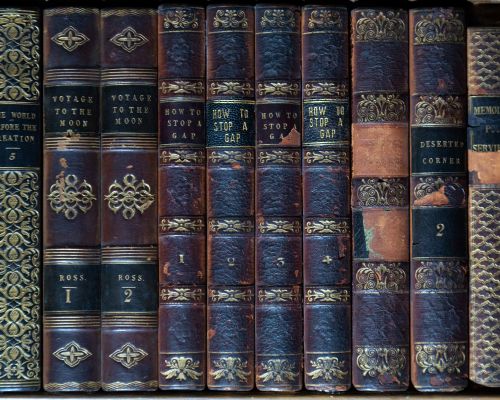
For our younger guests, it also marks the final chapter of the popular Family tours—a gentle, meaningful conclusion in a space where curiosity quietly takes root. Their departure through the secret door, framed by playful titles such as Voyage to the Moon and How to Stop a Gap, becomes part of the enchantment. These imaginative touches act as bookends to their visit, closing one chapter while opening countless others, and reminding every child that discovery, curiosity, and imagination often begin with a single, unexpected story.
By Volunteers, Barbara Hughes, Charles Gill and Dr Stacey Lewis and Curatorial and Learning Development Coordinator, Alison Poole.
You can explore the library’s collections on Discover and find further contact details on their Discover information page.
All images copyright of Weston Park, reproduced with kind permission of the copyright holder.
